What Are the Pros and Cons of Buying a Single-Family Home in BC?
Buying a single-family home in British Columbia offers privacy, land ownership, and long-term appreciation potential. However, high purchase prices, property taxes, and maintenance costs increase financial risk. Market volatility and stricter mortgage qualification rules in BC further affect affordability and buyer demand.
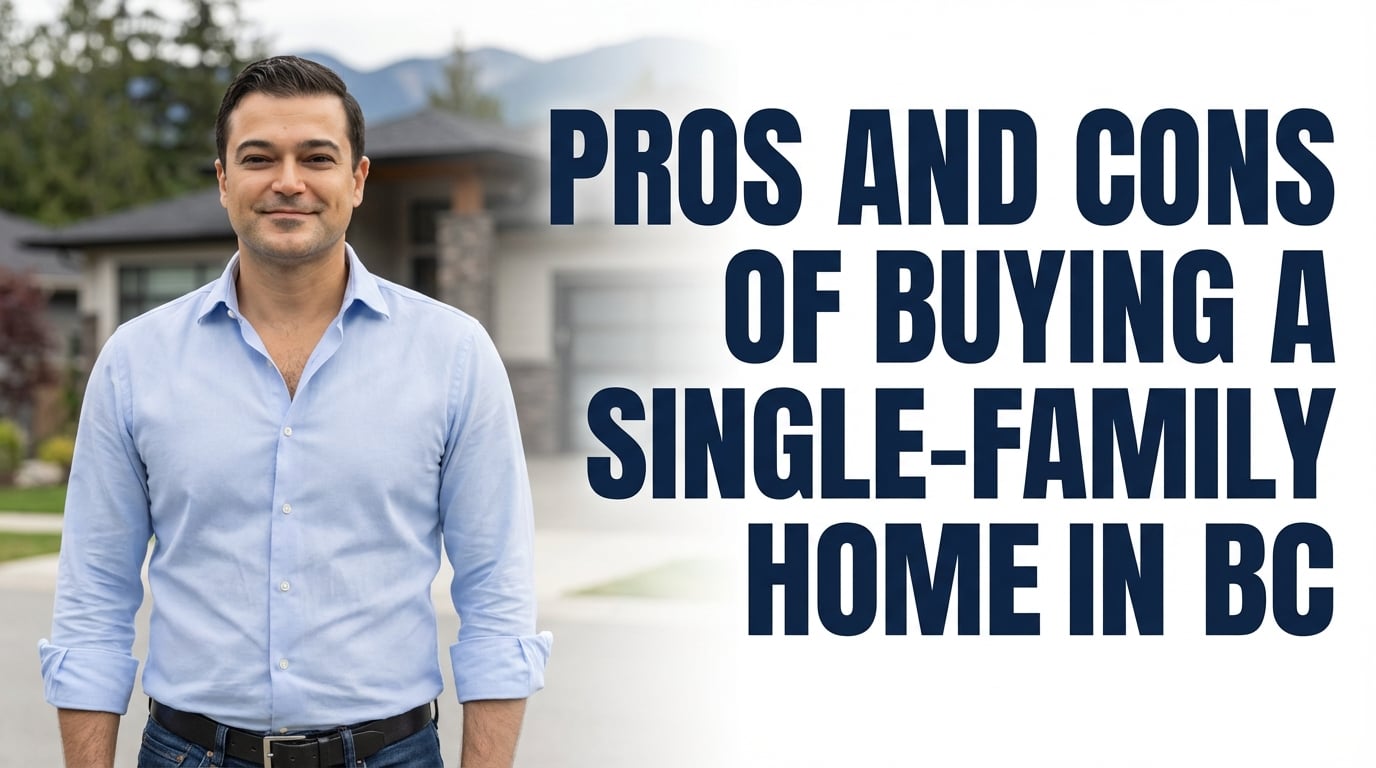
When I first started helping clients navigate Vancouver’s real estate market fifteen years ago, the choice between condos and single-family homes seemed straightforward. But after facilitating hundreds of transactions across British Columbia, I’ve learned that buying a single-family home involves far more complexity than most buyers imagine.
If you’re struggling with whether a detached house is the right investment for your family, you’re not alone – and as a licensed real estate professional in BC, I’m here to share what I’ve learned from years of guiding clients through this exact decision.
The bottom line? Single-family homes offer unmatched privacy, complete property control, and superior long-term value appreciation potential. However, they demand significantly higher purchase prices, ongoing maintenance responsibility, and larger financial commitments compared to condominiums or townhouses. The right choice depends entirely on your lifestyle, budget, and investment timeline.
What Exactly Is a Single-Family Home?
A single-family home is a freestanding residential dwelling situated on its own plot of land, designed exclusively for one family. Unlike condos or townhouses, you own both the structure and the land beneath it – giving you complete autonomy over every decision concerning your property.
In Canada, particularly in competitive markets like Vancouver and throughout BC, single-family homes represent the traditional dream of homeownership. They’re standalone structures with no shared walls, typically including front and backyards, and often featuring basements, terraces, or gardens.
The fundamental distinction? Total ownership equals total responsibility.
The Major Advantages of Owning a Single-Family Home
1. Complete Privacy and Space
There’s genuine freedom in not sharing walls with neighbors. Your children can play in the backyard without noise complaints. You can host gatherings, practice instruments, or renovate at reasonable hours without worrying about disturbing adjacent units.
In my experience working with clients across British Columbia, privacy consistently ranks as one of the biggest motivators for buyers transitioning from apartment or condo living. You control your environment entirely.
2. Full Property Control
Want to renovate your kitchen? Build an addition? Install a pool? Plant a vegetable garden? With a single-family home, these decisions are yours alone.
Unlike condominiums where strata councils dictate modifications, owning a detached house means freedom to customize your property. While you’ll still need municipal building permits for major renovations, you won’t need strata approval for cosmetic changes or structural improvements.
3. Superior Long-Term Investment Value
Here’s where single-family homes truly shine financially. Throughout my career, I’ve consistently seen detached houses appreciate at higher rates than comparable condos. The reason? Land value.
Condo prices are calculated based on the unit value alone, while single-family home values include land – a finite resource that typically increases over time. In hot markets like Vancouver, land appreciation often significantly outpaces building depreciation.
Recent real estate data shows BC’s median single-family home appreciated 2-3% higher annually compared to condos over the past decade. That difference compounds dramatically over a 25-30 year ownership period.
4. No Monthly Strata Fees
This surprises many first-time buyers I work with. While you’ll pay property tax regardless, single-family homeowners avoid the monthly strata or HOA fees that condo owners must cover.
In Vancouver, average condo maintenance fees range from $300-$600+ monthly – that’s $3,600-$7,200 annually redirected toward your mortgage or savings. Over 25 years, that’s $90,000-$180,000 in fees you’ll never pay.
5. Rental Income Potential
Many single-family homes in BC offer opportunities to create legal secondary suites, particularly basement apartments. This rental income can dramatically offset your mortgage payment.
A well-finished basement suite in metro Vancouver typically generates $1,200-$2,000+ monthly. I’ve had clients essentially cut their housing costs in half through strategic rental property investment.
6. Perfect for Growing Families
More bedrooms. Outdoor play space. Home office possibilities. Storage that doesn’t require renting lockers. Single-family homes naturally accommodate life’s expansions – children, elderly parents, or simply the accumulation that comes with settled living.
For families, choosing the best neighborhoods in Vancouver becomes crucial alongside property type selection.
7. Stronger Resale Appeal
When you’re ready to sell, single-family homes typically attract broader buyer interest – families, investors, and downsizers alike. This larger buyer pool often translates to quicker sales and stronger negotiating positions.
Keep Reading:
• pros and cons of a detached house
• single family home vs duplex home comparison
• should you live in a townhouse or detached home
• differences between detached house vs attached homes
The Real Disadvantages You Must Consider
1. Significantly Higher Purchase Price
Let’s discuss the financial reality. In BC’s major markets, single-family homes cost substantially more than comparable condos.
As of 2026, Vancouver’s average single-family home price exceeds $2 million, while comparable condos range from $600,000-$900,000. Even in more affordable BC regions, expect to pay 40-100% more for detached houses.
This higher price means:
- Larger down payment requirements ($100,000-$400,000+)
- Higher monthly mortgage payments
- Expensive mortgage insurance if putting down less than 20%
- Increased land transfer taxes
2. Complete Maintenance Responsibility
That freedom comes with obligations. You’re responsible for everything – roof repairs ($8,000-$15,000), furnace replacement ($4,000-$7,000), landscaping, snow removal, gutter cleaning, exterior painting, and all repairs.
I always advise clients to budget 1-3% of their home’s value annually for maintenance. For a $1.5 million home, that’s $15,000-$45,000 yearly. I’ve seen too many buyers underestimate this cost and struggle financially within their first two years.
3. Higher Property Taxes
Since property tax is calculated based on assessed value, and single-family homes typically have higher valuations than condos, your annual tax bill will be proportionally larger.
In BC, expect $5,000-$15,000+ annually in property tax for single-family homes, versus $2,000-$5,000 for comparable condos. Understanding BC property transfer tax exemptions helps reduce initial costs for qualifying buyers.
4. Greater Time Commitment
Homeownership isn’t passive. Between lawn care, seasonal maintenance, and general upkeep, expect 5-15 hours monthly maintaining your property – or budget for professional services.
For busy professionals or frequent travelers, this commitment can feel overwhelming. Condo living offers lock-and-leave convenience that houses can’t match.
5. Location Trade-offs
Here’s the market reality: affordable single-family homes typically mean longer commutes. To get a detached house with a yard within budget, you’ll often search further from urban centers.
Many buyers face this choice: space and privacy, or location and convenience? Consider exploring cheaper places to buy in Canada if location flexibility exists.
6. Higher Utility Costs
More square footage means higher heating, cooling, and electricity bills. A 2,000 square-foot house costs significantly more to heat than a 900 square-foot condo – and in BC’s climate, winter heating bills can be substantial.
Expect utility costs 50-150% higher than comparable condo living.
Financial Comparison: What You’ll Actually Pay
Let me break down real costs with a typical Vancouver-area example I recently walked clients through:
2026 Vancouver Purchase Scenario
That’s $6,425 monthly difference, or $77,100 annually. Understanding the complete cost of selling in BC is equally important for long-term planning.
However, the single-family home will likely appreciate more significantly and offers rental income possibilities that offset these higher costs over time.
Who Should Buy a Single-Family Home?
After years of guiding clients, I recommend single-family homes for:
Ideal Candidates:
- Growing families needing space and stability
- Buyers with substantial down payments ($200,000+)
- Those comfortable managing maintenance or hiring professionals
- People prioritizing long-term investment over short-term affordability
- Buyers planning to stay 7+ years
- Those wanting rental income possibilities
Reconsider If:
- You’re financially stretched by purchase price alone
- Your budget allows minimal maintenance reserves
- You travel frequently or prefer low-maintenance living
- Location matters more than space
- Your plans may change within 5 years
Making Your Decision: My Professional Framework
Step 1: Assess Financial Readiness
Be brutally honest about your financial capacity. Can you comfortably afford:
- 20% down payment?
- Monthly payments under 32% of gross income?
- 6-12 months emergency fund?
- Annual maintenance costs of 1-3% of home value?
Review legal fees for buying in BC to budget completely for closing costs.
Step 2: Define Lifestyle Priorities
Rank what matters most: privacy, space, low maintenance, location, investment potential, autonomy, or amenities. Your ranking reveals which property type suits your lifestyle.
Consider townhouses as middle-ground options offering more space than condos with less maintenance than houses.
Step 3: Consider Your Timeline
Single-family homes make financial sense with holding periods of 7+ years due to higher transaction costs. Learn about how long it takes to buy in BC to plan accordingly.
Step 4: Evaluate the Local Market
Work with a qualified real estate professional to understand local price trends, appreciation patterns, rental market strength, and future development plans affecting property values.
Regional BC Market Insights
Vancouver: Extremely expensive ($2-3 million+ in desirable neighborhoods). Many buyers compromise on location or choose older homes requiring renovation.
Fraser Valley: More accessible entry points ($1-1.5 million) with longer commutes but strong family communities.
Northern BC: Most affordable entry points, though job markets and resale potential require careful evaluation.
Common Buyer Mistakes I See Repeatedly
After years of transactions, these errors are most common:
1. Maxing Out Budgets: Leave buffer room for unexpected costs.
2. Skipping Inspections: That $800 inspection prevents $50,000+ surprises. Learn how to find a good inspector to protect your investment.
3. Underestimating Maintenance: Budget realistically from day one.
4. Emotional Decisions: Fall in love with numbers first, aesthetics second.
5. Skipping Pre-Approval: Know exactly what you can afford before searching.
Keep Reading:
• what are the closing costs of buying a home in BC
• minimum down payment to buy a home in BC
• what are the pros and cons of owning a condo
• factors that affect property value
• how to estimate property value in BC
• what taxes do you pay when buying a house in BC
Alternative Property Types Worth Considering
Townhouses: Middle ground offering more space than condos with less maintenance than houses. Review row house vs townhouse differences.
Building vs Buying: Consider whether building or buying is cheaper and understand construction timelines.
Pre-construction: Explore pre-construction versus resale condos if you’re considering alternatives.
Your Action Plan for Buying
3-12 Months Before Purchase:
- Improve credit score (aim for 680+)
- Save aggressively for down payment
- Reduce existing debts
- Research neighborhoods thoroughly
- Interview multiple agents using our realtor interview guide
- Get pre-approved with multiple lenders
1-3 Months Before Purchase:
- Narrow search to specific areas
- Tour properties using a comprehensive checklist
- Review comparable sales
- Prepare negotiation strategy with proven tactics
- Line up your inspector
- Finalize mortgage commitment
At Purchase:
- Make conditional offers with inspection, financing, and property disclosure conditions
- Complete thorough inspections
- Review all documents with a lawyer
- Secure insurance before closing
- Understand closing day procedures
Frequently Asked Questions
Q: Is a single-family home always a better investment than a condo?
Not always. While single-family homes historically appreciate more due to land value, condos can outperform in specific markets and timeframes. Location, condition, and market timing matter more than property type alone.
Q: How much should I budget for annual maintenance?
Budget 1-3% of your home’s value annually. For a $1 million home, that’s $10,000-$30,000 yearly. Newer homes fall on the lower end, while older properties may exceed 3%.
Q: Can I afford a single-family home with only 5-10% down?
Technically yes, but I rarely recommend it. With less than 20% down, you’ll pay mortgage insurance premiums, significantly increasing costs. The combination of higher payments, insurance, and maintenance responsibilities creates financial strain. Understand deposit vs down payment differences first.
Q: What income do I need to buy a single-family home in BC?
In Vancouver, you’ll likely need $200,000+ household income to comfortably afford average single-family homes. In more affordable BC regions, $80,000-$120,000 might suffice. Total housing costs shouldn’t exceed 32% of gross income. Check what qualifies as a good Vancouver salary.
Q: How long should I plan to stay?
Minimum 5 years, ideally 7-10+. Transaction costs can total 5-8% of your home’s value. You need enough appreciation time to offset these costs. Learn about risks of selling within one year of purchase.
The Bottom Line from a Real Estate Professional
As a BC realtor with fifteen years of experience, I can tell you there’s no universal “right” answer. Single-family homes offer incredible benefits – privacy, control, investment potential, and the quintessential Canadian homeownership dream. But they demand significant financial resources, time commitment, and ongoing responsibility.
Buy a single-family home if:
- Your finances comfortably support total ownership costs
- You value autonomy and privacy highly
- You’re prepared for property management
- You’re committed long-term to your location
- You’re building or have a family needing space
- You view your home as both shelter and investment
Choose alternatives if:
- You’re financially stretched by purchase price
- Low-maintenance living suits your lifestyle better
- Location matters more than space
- Your plans may change within 5 years
- You prefer amenity-rich buildings
- Total ownership responsibility feels overwhelming
Remember – the dream home isn’t defined by property type. It’s defined by how well it supports your actual life, financial health, and long-term goals.
Consider whether buying in a seller’s market requires special strategies, and review first-time buyer programs in BC to see if you qualify for financial assistance.
Homeownership is one of life’s biggest commitments. Take your time, do thorough research, and make decisions from knowledge rather than pressure. Your future self will thank you.
Are you searching for a home and feeling overwhelmed by all the options? Whether you’re considering a single family home where you make all the decisions concerning your property, or exploring properties with common areas, understanding the pros and cons of each type of property is crucial. As an experienced real estate agent and broker, Richard Morrison can help you weigh the advantages and disadvantages of every option.
When buying a home, numerous factors come into play – from properties calculated based on the value of the neighborhood to fees that charge based on amenities. Richard will provide an honest estimate and help you understand what creates higher value in your investment. Every criterion matters when you decide on your dream home.
Don’t navigate this journey alone – get started today! Contact Richard Morrison and enjoy expert guidance throughout your home-buying experience. You’re welcome to reach out for a consultation!

Let's Chat! Looking for a REALTOR® who can exceed your expectations? Look no further than Richard Morrison! His mission is to serve without limit & provide solutions that cater to your core needs.
• 20+ Years of Experience
• Medallion Member
• RE/MAX Hall of Fame

Latest Properties Added
| Property | Size | Price | Date Listed |
|---|---|---|---|
| 2-2509 Kitchener Street, Vancouver | 1,284 sqft | $1,298,800 | Sep 12, 2026 |
| 1406-938 Smithe Street, Vancouver | 761 sqft | $799,000 | Sep 11, 2026 |
| 2802-1033 Marinaside Crescent, Vancouver | 583 sqft | $639,000 | Sep 11, 2026 |
| 386 45th Avenue, Vancouver | 1,762 sqft | $2,199,900 | Sep 10, 2026 |
| 207-378 45th Avenue, Vancouver | 1,329 sqft | $1,478,900 | Sep 10, 2026 |
| 108-378 45th Avenue, Vancouver | 745 sqft | $879,900 | Sep 10, 2026 |
| 1-1958 60th Avenue, Vancouver | 1,463 sqft | $1,899,900 | Sep 9, 2026 |
| 2-1956 60th Avenue, Vancouver | 1,463 sqft | $1,899,900 | Sep 9, 2026 |
| 1-1956 60th Avenue, Vancouver | 1,463 sqft | $1,899,900 | Sep 9, 2026 |
| 6222 Logan Lane, Vancouver | 1,622 sqft | $1,250,000 | Sep 7, 2026 |
| 4339 Granville Street, Vancouver | 4,672 sqft | $6,500,000 | Sep 11, 2026 |
| 104-5281 Oakmount Crescent, Burnaby | 839 sqft | $598,000 | Sep 11, 2026 |
Start your search with Richard Morrison, Top Award Winning Vancouver Realtor
Contact Richard Morrison Top Vancouver Realtor today to find a Vancouver houses for sale and Vancouver condos for sale. Also check out Burnaby houses for sale or maybe Burnaby condos for sale. If you prefer North Shore, take a look at our listings in North Vancouver houses for sale and North Vancouver condos for sale.