Property Disclosure Statement in BC: The Ultimate Guide
Buying or selling a home in British Columbia? You’ll likely encounter something called a Property Disclosure Statement, or PDS. This important document can influence the deal, so it pays to understand what it is and how it works.
Let’s break down everything you need to know about the property disclosure statement BC residents rely on. The property disclosure statement is a crucial document in the real estate transaction process, as it provides potential buyers with important information about the condition of the property and any known issues. This transparency can help prevent disputes down the line and is particularly valuable for those considering properties that may be involved in the foreclosure process in British Columbia .
Understanding these disclosures is essential for making informed decisions and navigating the complexities often associated with purchasing properties under financial distress. Buyers should pay close attention to any disclosures related to structural problems, water damage, or leaky condo issues , as these can lead to costly repairs down the road. In British Columbia, properties with a history of moisture problems must be clearly disclosed, ensuring that buyers are fully aware of potential risks.
By thoroughly reviewing the property disclosure statement, buyers can make informed decisions and avoid unexpected surprises after purchase.
Key Takeaways
- The PDS discloses problems/defects the seller is aware of to protect buyers.
- Sellers must fill it out honestly or risk legal issues down the road.
- Buyers shouldn’t rely solely on the PDS and should do their own due diligence.
- The PDS is not legally required but included with most MLS listings.
- It can be incorporated into the purchase contract for added protection.
Did you know that according to a survey by Richard Morrison, nearly 40% of BC residents don’t fully grasp the purpose and use of the property disclosure statement?
When buying or selling a home , few documents are as crucial as the property disclosure statement. Provided by the seller, the PDS discloses any issues or defects they are aware of that could impact the property’s value or the buyer’s decision. This document serves as a critical safeguard for buyers, ensuring they are well-informed about the property’s condition before making a purchase.
For sellers, it is equally important to complete the PDS accurately, as failing to disclose known issues can lead to legal complications down the road. Additionally, understanding how to show properties effectively can make a significant difference in attracting serious buyers and fostering transparency throughout the transaction process.
Let’s explore what BC home buyers and sellers should know about this form.
What is the Property Disclosure Statement BC?
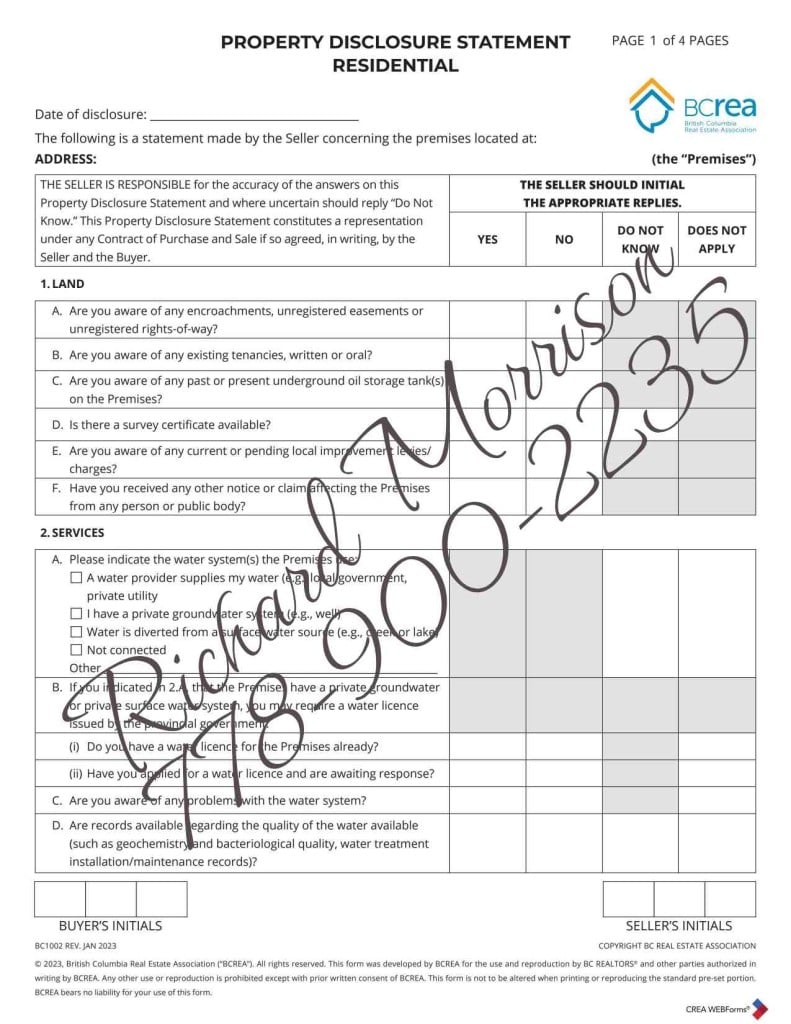
The property disclosure statement (PDS) is a document created by the British Columbia Real Estate Association (BCREA). It contains detailed questions for the seller to answer about the condition of the home.
The questions cover things like the roof, foundation, plumbing, heating, past flooding or leaks, unauthorized renovations , and other defects. The seller must disclose any problems they are clearly aware of.
The PDS allows buyers to make an informed decision about purchasing the property when combined with their own due diligence. It aims to provide transparency and protect home buyers in BC .
Why Do Sellers Need to Fill Out a PDS in BC?
Filling out a PDS thoroughly benefits the seller by disclosing any issues upfront before problems arise down the road. It reduces their liability.
If a seller hides a known defect, they could later face legal action from the buyer. The PDS creates transparency around the property’s condition.
While not required by law, a PDS is considered best practice when listing a home on the MLS system in BC. Not providing one could be a red flag for buyers.
What Should BC Home Buyers Know About the PDS?
The PDS gives buyers insight into issues that may affect the property. But it should not be solely relied upon to make a purchase decision.
Buyers must still carry out their own due diligence like home inspections, permitting research, strata document reviews, etc. The PDS complements these efforts.
Also, the PDS only discloses what the seller is clearly aware of at that moment. Their knowledge may be incomplete, so independent verification is key.
Can the PDS be Part of the Purchase Contract?
Yes, it is recommended that the buyer’s real estate agent incorporate the PDS as part of the purchase contract.
This may give added legal protections if the seller misrepresents the property’s condition in the PDS. But consult your own lawyer to understand your rights.
What if the Seller Declines to Provide a PDS?
The PDS is not legally required in BC, so some sellers may refuse to provide one. This could signal they are hiding something, but not always.
For example, a seller who has rented the home out for many years may not have enough knowledge to fill out a PDS accurately.
If no PDS is provided, the buyer should be extra thorough with inspections and research. Consider it a red flag requiring deeper due diligence .
Can the Seller Modify or Scratch Out Parts of the PDS?
Yes, it is fairly common for sellers of rental properties to scratch out the entire PDS document or parts of it.
Again, this is because they likely lack the personal experience living in the home to provide detailed answers.
In this case, the buyer should not rely much on the limited PDS and should conduct extensive third-party research on the property’s condition using an inspector, city records, etc.
Are There Different Versions of the PDS Form?
The BCREA provides different versions of the PDS form depending on the type of property:
- Strata/Condo
- Residential House
- Rural Land
- Rural Land and Building
- First Nations Leasehold
The questions are tailored to issues specific to each property type. For example, the strata PDS asks about parking stalls while the rural version asks about septic systems.
How Does the PDS Work for New Construction?
Even presale and new construction have disclosure requirements under BC’s real estate laws. The developer must provide a disclosure statement to potential buyers .
These developer PDS documents are extremely long and detailed, sometimes hundreds of pages. They contain extensive information on the project, units, construction timeline, approvals, warranties and more.
Concluding Points
- It discloses problems/defects known to the seller to protect buyers.
- Honesty from sellers is crucial. Inaccuracies could spur legal issues.
- Buyers should verify PDS info through their own due diligence.
- PDS is recommended but not legally required in BC.
- Incorporating into the purchase contract adds further protections.
Now that you understand the property disclosure statement better, you can navigate BC real estate transactions with confidence!
Frequently Asked Questions
Q: What is a Property Condition Disclosure Statement?
A: A Property Condition Disclosure Statement is a document that sellers of residential real estate in British Columbia (BC) are required to provide to prospective buyers. It serves as a disclosure form, providing information about the condition of the property and any known defects or issues.
Q: What is the purpose of a Property Condition Disclosure Statement?
A: The purpose of a Property Condition Disclosure Statement is to ensure transparency in real estate transactions. It allows sellers to disclose any defects in the property, and it provides buyers with information they need to make informed decisions about purchasing the property.
Q: What types of defects are covered in a Property Condition Disclosure Statement?
A: A Property Condition Disclosure Statement covers both patent defects and latent defects in the property. Patent defects are visible and obvious, while latent defects are not easily discoverable and may not be obvious to the buyer.
Q: Is a Property Condition Disclosure Statement mandatory in BC?
A: Yes, a Property Condition Disclosure Statement is mandatory for sellers of residential real estate in BC. It is a requirement under the Real Estate Development Marketing Act.
Q: Do sellers need to provide a PCDS even if there are no known defects?
A: Yes, sellers are still required to provide a Property Condition Disclosure Statement even if there are no known defects in the property. The statement serves to confirm that the seller has disclosed any issues with their property.
Q: Who is responsible for filling out a PCDS?
A: The seller of the property is responsible for filling out the Property Condition Disclosure Statement. They are required to provide accurate and truthful information about the condition of the property to the best of their knowledge.
Q: Can a buyer request a home inspection before signing an offer?
A: Yes, a buyer may request a home inspection before signing an offer on a property. A home inspection can provide additional information about the condition of the property and help the buyer make an informed decision.
Q: Can sellers be held liable for defects not disclosed in the PCDS?
A: Yes, sellers can be held liable for defects not disclosed in the Property Condition Disclosure Statement. If it is found that the seller had real knowledge of the property defects and intentionally withheld that information, they may face legal consequences.
Q: Do sellers need to disclose issues with their property even if they have already accepted an offer?
A: Yes, sellers are still required to disclose issues with their property even if they have already accepted an offer . It is important for sellers to be transparent and provide any relevant information about the property to the buyer.
Q: Should buyers seek legal advice before signing a PCDS?
A: It is highly recommended for buyers to seek legal advice before signing a Property Condition Disclosure Statement. This will help ensure that they fully understand their rights and obligations in the real estate transaction .
Q: Does the PCDS cover all types of properties?
A: The Property Condition Disclosure Statement covers residential properties in British Columbia (BC). It may not be applicable to properties that fall under different categories, such as rural properties or commercial properties.
Conclusion
In British Columbia, the Property Disclosure Statement (PCDS) is a crucial document in the process of buying or selling a property. This statement is a legal requirement that must be completed and signed by the seller, providing details about any problems with the property. The PCDS protects prospective purchasers by allowing them to be informed about the condition of the property before deciding on making an offer.
It is also a required document in the contract of purchase and sale , ensuring that the seller is liable for any misrepresentation of the property.
The PDS should be completed by the seller after a home inspection is done, as it requires information about major issues and defects in the property. Both the seller’s and the buyer’s real estate professionals play a key role in this process. The PCDS becomes a part of the contract once an offer has been accepted, and failing to disclose defects in the property may result in legal consequences for the seller.
Therefore, it is essential to carefully complete the property condition disclosure statement document to ensure the safety of the buyer and the integrity of the real estate transaction .
How Do Private Listings Impact Property Disclosure Requirements in BC?
Private listings in bc real estate can impact property disclosure requirements by limiting public access to critical property details. Unlike MLS-listed homes, these off-market transactions may not always follow the same transparency standards, potentially reducing buyer awareness of property conditions, defects, or liabilities that would typically be disclosed in standard listings.
How Does the Property Disclosure Statement in BC Relate to Disclosure of Representation in Trading Services?
The Property Disclosure Statement in BC plays a crucial role in real estate transactions, ensuring buyers are informed about property conditions. This transparency aligns with understanding disclosure in trading services , emphasizing the importance of clear communication between agents and clients regarding property details and client representation, fostering trust in the market.
How Does the Property Disclosure Statement Affect Eligibility for Property Transfer Tax Exemption in BC?
The Property Disclosure Statement plays a crucial role in assessing eligibility for property transfer tax exemptions in BC. By providing detailed information about the property, buyers can better navigate potential tax benefits. Thus, understanding property transfer tax exemptions in bc is essential for making informed real estate decisions.
Ready to Buy or Sell in BC?
Navigating British Columbia’s real estate market takes expertise . For upcoming buying or selling in the province, make sure you have Richard Morrison Realtor on your side! Richard: Whether you’re curious about current property valuations or need guidance on how to buy a presale condo in BC , his personalized approach will simplify the process.
Trust Richard to help you secure the home or investment that perfectly fits your goals. With years of experience in the industry, Richard understands market trends and can advise you on the best time to buy a house in BC. His in-depth knowledge of neighborhoods, property values, and future developments ensures you make informed decisions.
Let Richard’s expertise guide you toward a seamless and successful real estate transaction.
- Knows the local BC market inside and out
- Has a proven track record of success
- Will ensure the PDS process goes smoothly
- Can negotiate the best deal for your needs
- Has outstanding communication skills
- Is focused on providing exceptional service
With the Richard guiding you, your BC property dreams can become reality!
Sources:
https://www.bcrea.bc.ca/legally-speaking/property-disclosure-statement-tips-483/

Let's Chat! Looking for a REALTOR® who can exceed your expectations? Look no further than Richard Morrison! His mission is to serve without limit & provide solutions that cater to your core needs.
• 20+ Years of Experience
• Medallion Member
• RE/MAX Hall of Fame

Latest Properties Added
| Property | Size | Price | Date Listed |
|---|---|---|---|
| 141 27th Street, North Vancouver | 1,651 sqft | $1,899,000 | Sep 13, 2026 |
| 2-2509 Kitchener Street, Vancouver | 1,284 sqft | $1,298,800 | Sep 12, 2026 |
| 1406-938 Smithe Street, Vancouver | 761 sqft | $799,000 | Sep 11, 2026 |
| 2802-1033 Marinaside Crescent, Vancouver | 583 sqft | $639,000 | Sep 11, 2026 |
| 386 45th Avenue, Vancouver | 1,762 sqft | $2,199,900 | Sep 10, 2026 |
| 207-378 45th Avenue, Vancouver | 1,329 sqft | $1,478,900 | Sep 10, 2026 |
| 108-378 45th Avenue, Vancouver | 745 sqft | $879,900 | Sep 10, 2026 |
| 1-1958 60th Avenue, Vancouver | 1,463 sqft | $1,899,900 | Sep 9, 2026 |
| 2-1956 60th Avenue, Vancouver | 1,463 sqft | $1,899,900 | Sep 9, 2026 |
| 1-1956 60th Avenue, Vancouver | 1,463 sqft | $1,899,900 | Sep 9, 2026 |
| 6222 Logan Lane, Vancouver | 1,622 sqft | $1,250,000 | Sep 7, 2026 |
| 4339 Granville Street, Vancouver | 4,672 sqft | $6,500,000 | Sep 11, 2026 |
Start your search with Richard Morrison, Top Award Winning Vancouver Realtor
Contact Richard Morrison Top Vancouver Realtor today to find a Vancouver houses for sale and Vancouver condos for sale. Also check out Burnaby houses for sale or maybe Burnaby condos for sale. If you prefer North Shore, take a look at our listings in North Vancouver houses for sale and North Vancouver condos for sale.